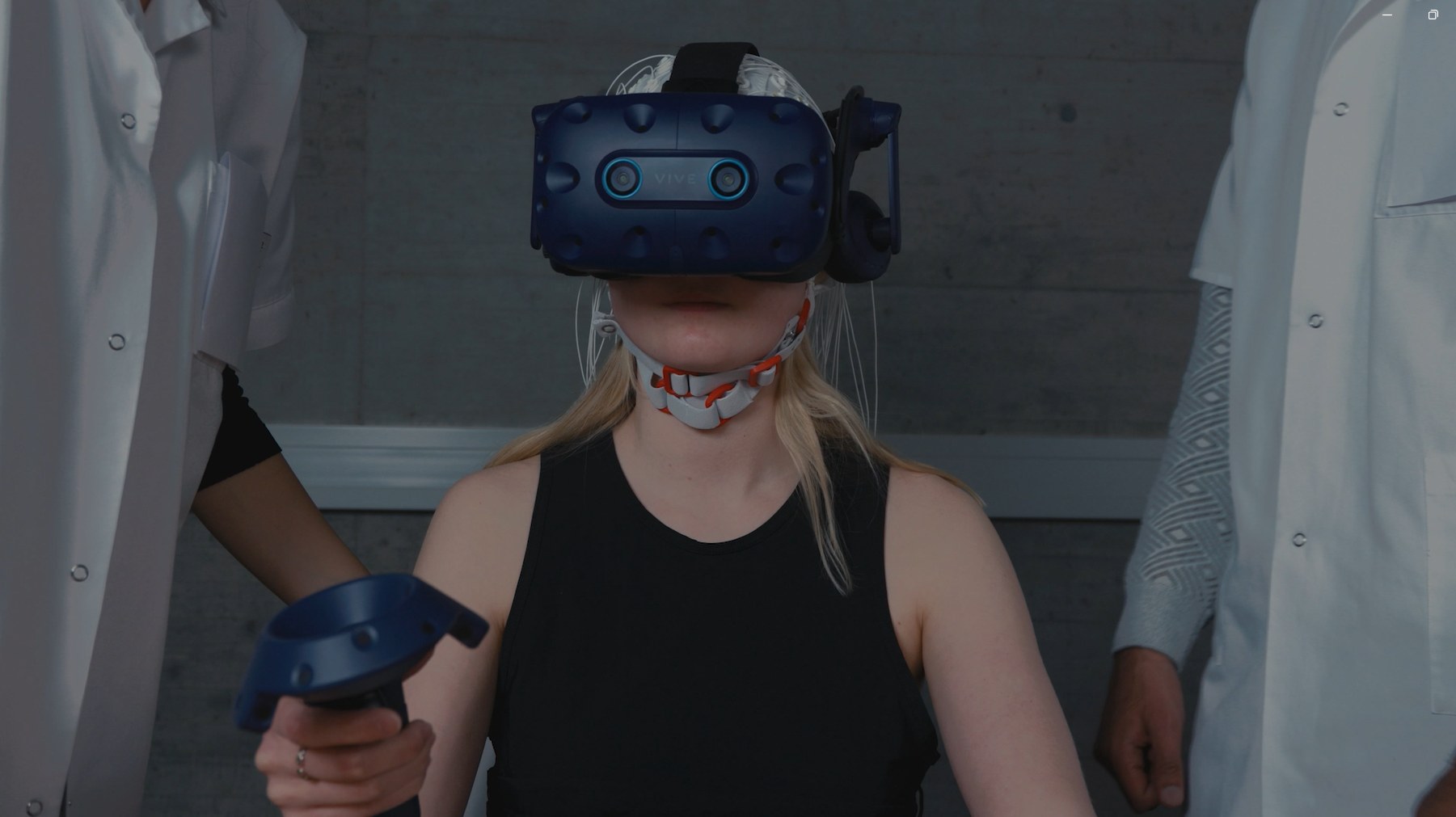
Cognitive overload
measuring cognitive load to prevent workplace accidents

THERE IS A POINT WHERE PERFORMANCE BREAKS AND ATTENTION DROPS.
WE MEASURED IT.
object of the study
To distinguish a state of cognitive flow from a state of overload, and to test whether that distinction can be made from measured signals rather than from observed failure.
28
Subjects
90’
Duration
3
Sensors
6
Questionnaires
VR
Headset
high-cognitive load is not lower performance.
it’s high performance that cannot last.
building a proxy for cognitive load
we created a metric
performance score
what’s inside?
Measured through the secondary task.
The time between stimulus and response tells us how much cognitive reserve is still available.
Measured through the primary task.
The number of completed sequences indicates the level of performance: each completed sequence means a series of actions was performed correctly.
Measured through the primary task.
The number of correct actions gives us information about working memory capacity.
When a phenomenon is too complex to observe directly, we can observe another phenomenon correlated with it, which gives us information about the main one. In this case, the Performance Score we built ourselves was meant to help us identify the time window in which the state of flow changes into a state of overload.
reaching high-cognitive load under controlled conditions.
Subjects were asked to carry out a main task made up of actions and sequences, at three difficulty levels presented in random order. Throughout the main task, a secondary task required them to react to visual and auditory stimuli. Everything took place in a virtual-reality reproduction of a warehouse.
looking for markers.
What were the body and the brain doing before and after performance dropped? Sensors were used to identify markers of cognitive load.
how do you study a complex phenomenon?
neural
what was the brain doing?
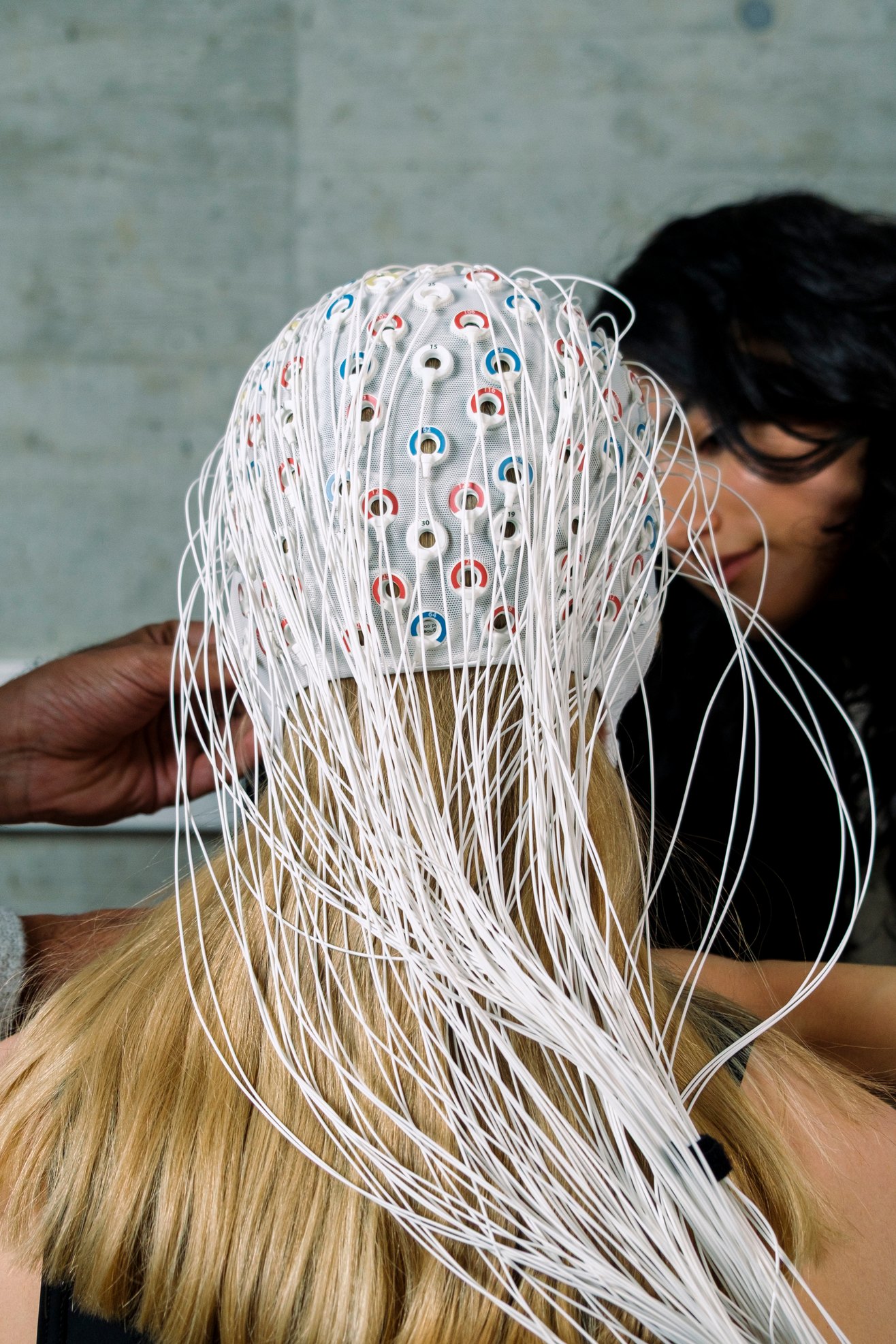
ELECTROENCEPHALOGRAM
Headset with electrodes recording the brain’s electrical activity
PHYSIOLOGICAL
what was the body doing?
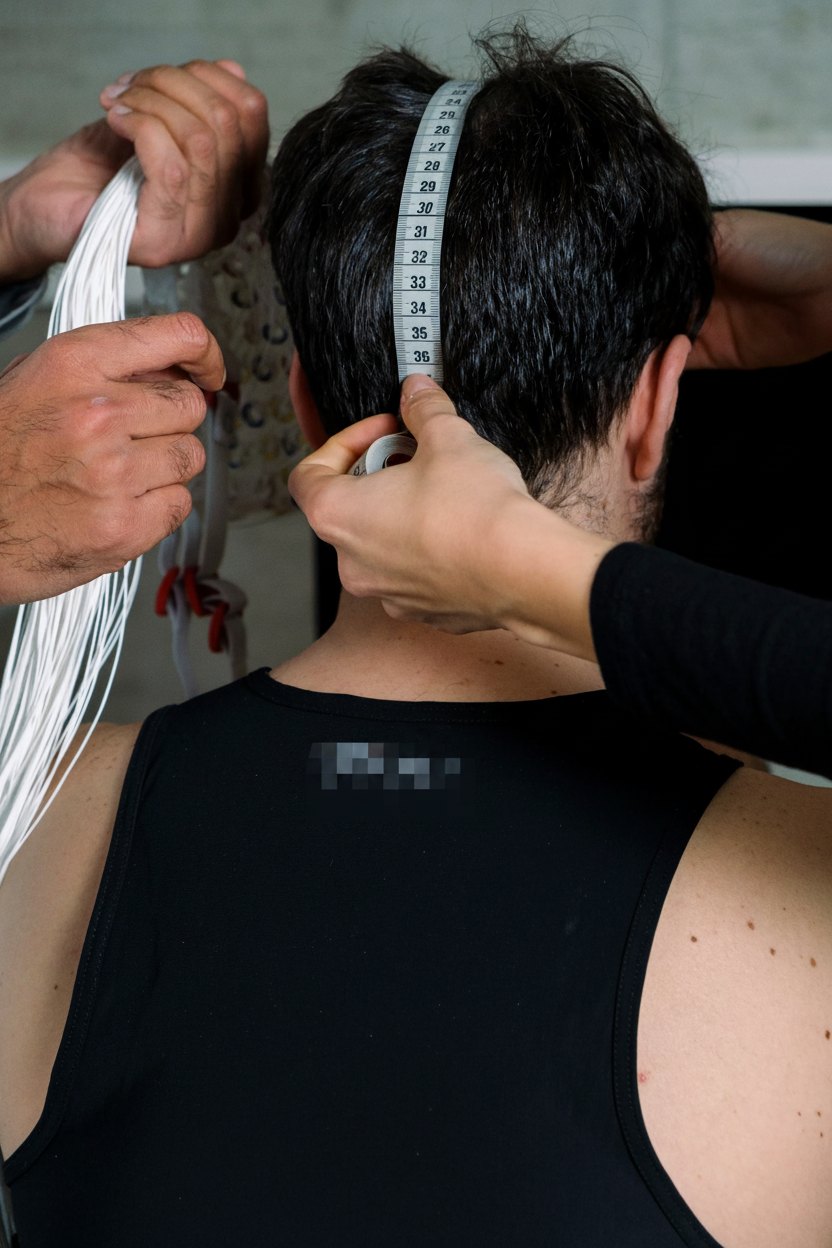
RESPIRATION
Wearable vest with integrated sensors
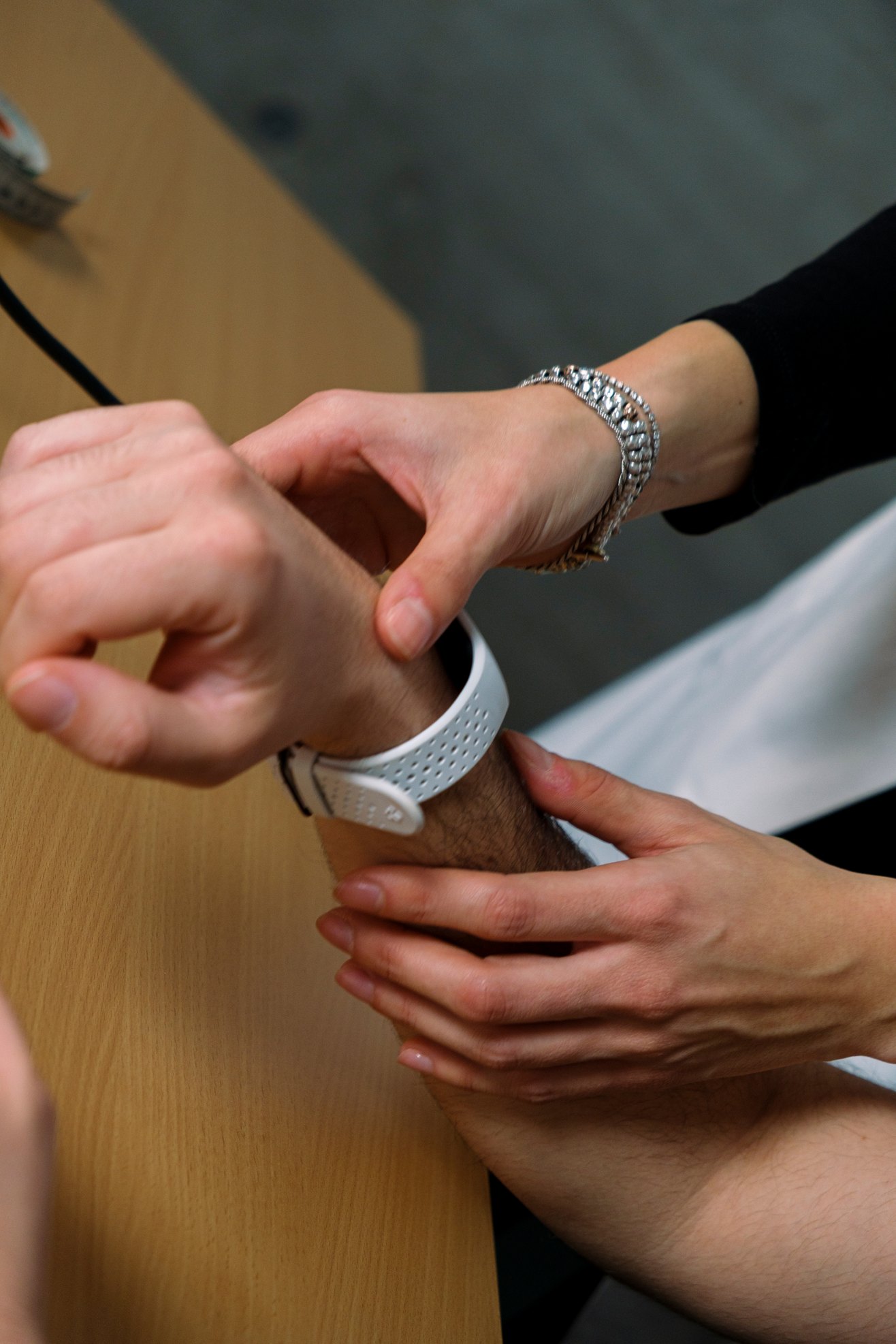
HEART RATE
Wearable bracelet with integrated sensors
We also assessed individual traits and perceived workload through specific questionnaires, to match objective measures with subjective perception.
NASA-TLX
what was the person perceiving?
perceived workload
Confirms that subjects reached the intended level of fatigue. Administered after each experimental block.
individual traits
anxiety
attention
fatigue
working memory
sleepiness
Standardized questionnaires designed to capture individual traits in the domains listed. Mostly administered before the tasks.
we measure for a reason.
participant profiles
+
markers
=
model

INDIVIDUAL TRAITS


respiration
wearables
brain activity
heart rate
model TO PREDICT OVERLOAD BEFORE
IT STRIKES

To prevent accidents.
FROM SIGNALS TO CLASSIFICATION.
Evaluating accuracy.
voices behind the project
what comes next?
This was the first phase of a much wider research project. To understand such a phenomenon and develop a system able to predict cognitive load to avoid workplace accidents, we need to extend our research to a larger dataset and further analyze model accuracy.

project commissioned by